Bangsamoro starts a new chapter
COTABATO CITY, Philippines – The Bangsamoro Autonomous Region in Muslim Mindanao (BARMM) starts a new chapter today as the first elected parliament holds its inaugural session starting at 1:30 p.m. at the regional legislature’s Plenary Hall.
The session will be opened by Sheikh Muslim Guiamaden, the Bangsamoro Wali or ceremonial head, who is expected to oversee the election of a temporary presiding officer, enabling the 80-member body to conduct business.
The temporary presiding officer will call the session to order and direct the secretariat to call the roll of Members of Parliament (MPs), signaling the formal start of their term as regional legislators with a popular mandate acquired during the Sept. 14 regional elections.
READ: Interim Bangsamoro Parliament enacts 94 laws since 2019
The BARMM has been run by an interim government, called the Bangsamoro Transition Authority, since its creation in March 2019, with its members all appointed by the president. Its parliamentary structure and the powers invested in it by Congress through the Bangsamoro Organic Law (BOL) were largely a result of the peace agreement signed in 2014 between the government and the Moro Islamic Liberation Front (MILF).
The interim government was headed by MILF chair Ahod “Al Haj Murad” Ebrahim from its inception until he was replaced by Abdulraof Macacua in March 2025 as chief minister.
Originally set for May 2022, the regional elections were postponed four times. The current set of elected MPs will serve until June 30, 2031, just four months shy of five years. The term of succeeding ones will only be for three years.
READ: Let Bangsamoro have its say
Groundwork set
The new parliament takes office amid the region’s continuing quest for lasting peace and development after decades of war, following on earlier efforts of the BTA.
The BTA was a mix of former Moro revolutionaries, technocrats, civil society leaders and non-Moro sectoral leaders who carried the burden of laying the foundations of a functioning autonomous government.
READ: Marcos backs Bangsamoro autonomy, vows continued nat’l gov’t support
As the BTA ended its session on Oct. 21, it had set the structure of self-governance in the Bangsamoro region comprising of the provinces of Maguindanao del Sur, Maguindanao del Norte, Lanao del Sur, Basilan and Tawi-Tawi.
Over seven years, the interim parliament enacted 94 Bangsamoro Autonomy Acts and adopted 582 resolutions. These include six of the seven priority codes mandated by BOL — administrative, civil service, education, electoral and local governance, and indigenous peoples.
The BTA failed to pass a revenue code, a crucial piece of legislation that equips the BARMM government with the legal authority to define, levy, and collect local taxes, fees, and charges, as well as the administration of the annual automatic block grant from the national government.
This code also defines the revenue or shares in revenues from the exploration, development, and utilization of natural resources derived from land or water areas or territories within the Bangsamoro territory.
Outgoing Speaker Mohammad Shuaib Yacob expects the measure to be first among the tasks awaiting the elected parliament, along with a Code of Conduct and Ethics for members.
Addressing the elected parliament members during the BTA’s final session on Oct. 21, Yacob offered a guiding principle: “Authority is temporary, but the trust of the people is sacred.”
Beyond the codes, the BTA created eight municipalities from the 63 villages carved from Cotabato province and grouped these as the region’s Special Geographic Area.
It also established the Bangsamoro Science High School System, enacted a law protecting the rights of internally displaced persons, and passed 16 laws establishing or upgrading hospitals.
Peace dividends
Legislation alone, however, does not feed families or secure communities. Hence, the transition government has shown that autonomy could deliver tangible peace dividends to communities long left at the margins of poverty.
The indicators point to a clear shift. The Philippine Statistics Authority reported that poverty incidence among families in the BARMM fell to 12.8 percent in 2025 from a revised 26 percent in 2023. It was the largest improvement among the country’s 18 regions.
The improving peace and order condition since the establishment of BARMM, along with functioning institutions, served as a magnet for investments.
Speaking at the Mindanao Development Forum 2026 in Davao City on Oct. 27, Macacua said the region was ready to take its next step “from peace to prosperity,” highlighting the P5-billion investments registered across the region last year in agriculture, fisheries, housing, logistics, and other sectors.
“We know that confidence is earned through performance,” he said. “We must show that our institutions deliver, that commitments are kept, and that investments produce results.”
Comprehensive security and operational measures have been put in place for the inaugural session, with thousands of soldiers and policemen deployed for the historic event.
Leadership
With the first regular parliament taking over, significant challenges remain.
The political track of the Bangsamoro peace process, capped by the election of new parliament members on Sept. 14, has substantially outpaced the normalization track.
Still largely unfinished is the normalization phase, which includes the decommissioning of thousands of former combatants, the transformation of MILF camps into productive communities, and the signing of an exit agreement with the national government.
The election of the Chief Minister and the Parliament Speaker will be among the main proceedings at today’s session, with no single political party holding majority seats to elect the region’s next set of leaders.
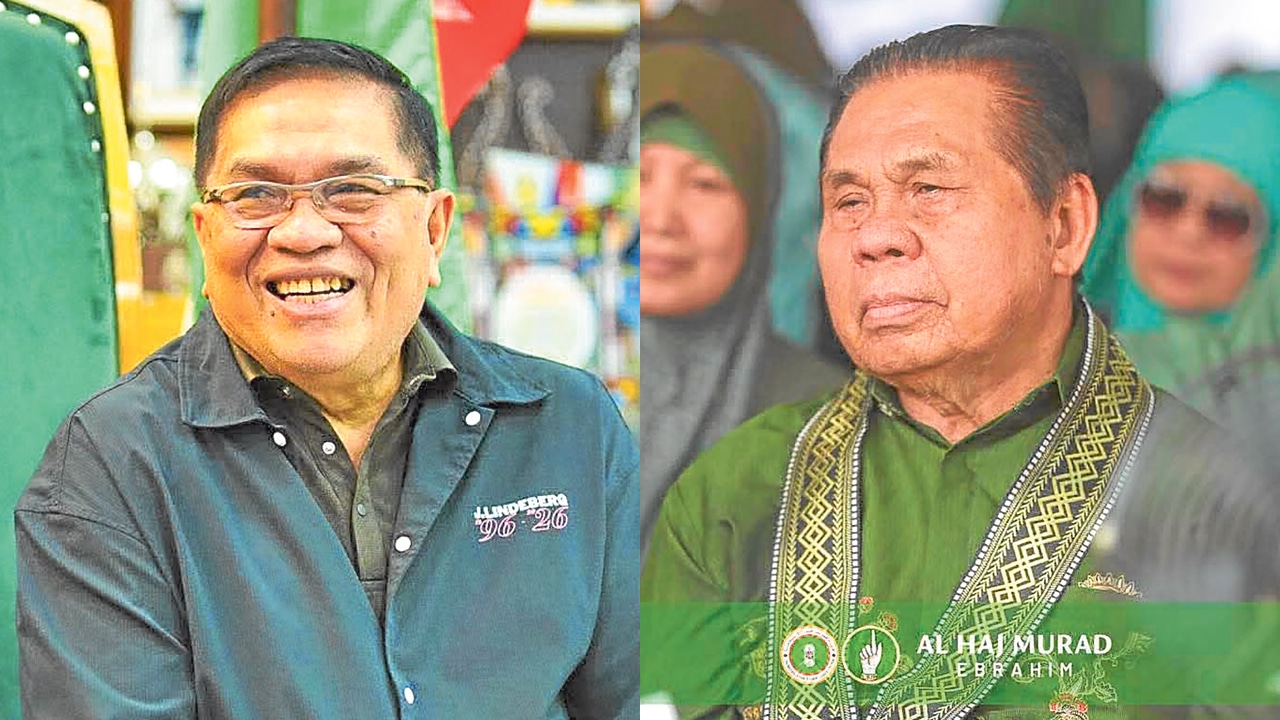
Macacua, of the Bangsamoro Federalist Party, and Ebrahim, of the United Bangsamoro Justice Party, both key figures of the MILF, are the leading contenders for chief minister.
Earlier, Macacua had announced a 46-member coalition as forming the new parliament majority for the sake of organizing the regional government as well as the legislature’s leadership. He is widely expected to be the coalition’s candidate for chief minister.
Close to half of the MPs come from the BTA, many of whom rose from the ranks of the Moro revolution.
Women hold 13 seats, or 16.25 percent of the chamber: six party representatives, four district representatives, and three sectoral representatives. —With a report from Edwin O. Fernandez /atm
The post Bangsamoro starts a new chapter appeared first on Inquirer.net.